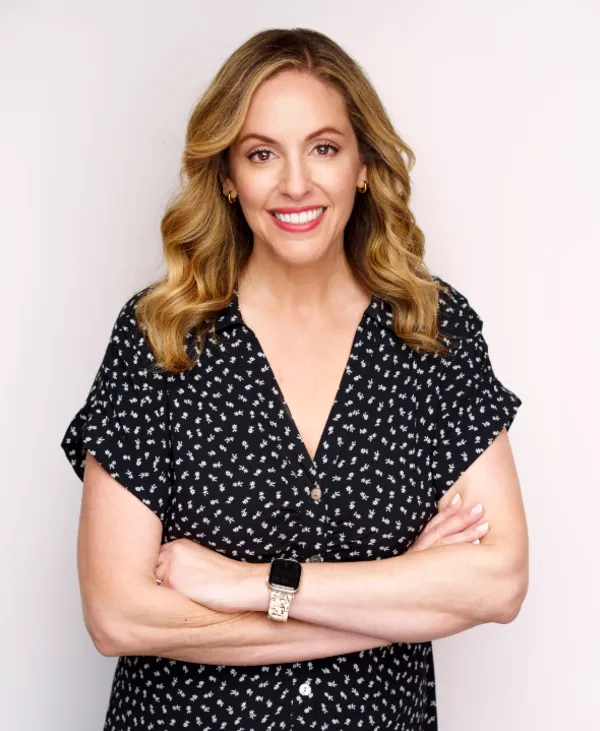
Dr. Sterling’s Story
A Lifelong Commitment to Neurodiversity
Dr. Lindsey Sterling’s education, training, and experience speak for themselves when it comes to her qualifications in the field of neurodiversity. But when families choose a provider or clinic, they’re not just looking at a resume — they want to know the person behind the care.
Dr. Sterling knew she wanted to become a psychologist as early as middle school, when she was selected to be a peer counselor. It never felt like a conscious decision — just something she always knew she was meant to do. Her mother was a teacher, and Dr. Sterling often volunteered in her classroom. She found herself naturally drawn to the special education rooms and felt an early connection to individuals who think and experience the world differently. Growing up with a neurodivergent family member shaped her understanding, deepened her empathy, and strengthened her connection to neurodivergent individuals and their families.
At UCLA, she majored in psychobiology — the perfect marriage of her intellectual interests in psychology and the brain. While she was fascinated by neuroscience (and even worked in a lab dissecting brains!), she realized she wanted more direct interaction with people. Around that time, she began learning about autism in some of her classes and became eager for hands-on experience.
She was fortunate to have a great-uncle who was a clinical psychologist specializing in autism, and a great-aunt who worked as a speech therapist in his clinic. Dr. Sterling spent two summers living with them in the Boston area and working at the clinic full-time — a formative experience that solidified her passion. She truly fell in love with the kids and left knowing, without a doubt, that she wanted to dedicate her career to autism.
After college, she worked for what was then called Cure Autism Now / The Autism Genetic Resource Exchange (now part of Autism Speaks) — a nonprofit founded by families of autistic children to advance research on autism. This experience fueled her passion for research that could make a real impact on the lives of the autistic individuals and their families who she had grown so attached to.
She went on to earn her Ph.D. in Child Clinical Psychology at the University of Washington, where she trained under renowned autism expert Dr. Geraldine Dawson at the UW Autism Center. During her six years in the program, Dr. Sterling had the opportunity to dive deeply into research on autism genetics, neuroimaging, and psychophysiology — while also training in comprehensive assessment and therapy for autism and related conditions. Everything she did during this time — from therapy clients to research studies to clinical placements and specialized training opportunities — centered around autism and neurodiversity. One particular training experience, the The Leadership Education in Neurodevelopmental and Related Disabilities (LEND) program, expanded and deepened her knowledge of all types of neurodevelopmental differences.
In graduate school she also co-authored peer-reviewed papers and book chapters. One of her most well-known contributions came while interviewing autistic adults as part of a research study. She began to notice a recurring pattern: many of them were experiencing depression — a topic that had received little attention in the field at the time. She went on to publish one of the first papers on depression in autistic adults, a study that has been considered groundbreaking in our understanding of co-occurring depression and autism.
Dr. Sterling was later selected for the Developmental Disabilities track for her predoctoral internship (residency) at UCLA, where she worked with children, teens, and adults with a wide range of neurodevelopmental differences. She then secured a government grant to study the physiology of anxiety in autistic children during her postdoctoral training. Dr. Sterling had the opportunity to teach courses on relationships and intimacy at the UCLA Pathway Extension, a program designed to support neurodivergent students in their transition to independence and employment. While she had always enjoyed working with adults, her experience at Pathway deepened that passion. The connection with her students made a lasting impression, and it was through this work that Dr. Sterling solidified her commitment to working with neurodivergent adults as part of her career moving forward.
Following her training, Dr. Sterling was recruited to academia, first serving as the Director of the Claremont Autism Center at the Claremont Graduate University and then as a tenure-track professor at Cal State Long Beach. She loved teaching, mentoring students, collaborating with colleagues, and contributing to autism research through her research with autistic adults. But over time, she realized something was missing: direct connection with families. She missed the one-on-one work that first drew her to the field.
After a great deal of reflection, Dr. Sterling made the difficult decision to leave academia and move into private practice full-time — and she’s never looked back. She now feels she’s doing her most meaningful work: applying everything she’s learned to directly support individuals and families every day.
Dr. Sterling continues to stay involved in the academic world by giving keynote lectures, training providers across the country and internationally, and collaborating on continuing education programs — including specialized trainings on autistic females and neurodiversity-affirming care. Most recently, The Sterling Institute became a training site for doctoral students in the Clinical Psychology program at the University of California, Irvine (UCI), allowing her to help shape the next generation of clinicians.
Dr. Sterling is always thinking about how to improve clinical care. She actively consults with colleagues, stays connected to the latest research, and continues learning — even when she’s the one doing the teaching.
As a mom to two uniquely wired boys, Dr. Sterling’s perspective has deepened — allowing her to truly empathize with parents, connect on a personal level, and better understand the day-to-day experiences of the families she supports. One of the guiding questions she consistently asks herself and her team is: “What kind of care would I want for my own children?” That principle guides everything we do.
The Sterling Institute for Autism has become her life’s work — and she’s honored to share it with the families who walk through our door.