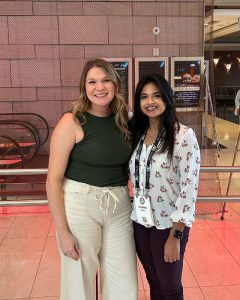
 In full transparency, the term “neuropsychology” always sounded intimidating to me. It was not until my clinical training that I developed a deep fascination for this branch of psychology. Neuropsychology recognizes that our habits and life experiences are not just abstract influences on mood or behavior; rather, these factors shape measurable neurobiological processes that affect how we think, feel, and function. This whole-person perspective has become the foundation of how I approach assessment and motivated me to attend the National Academy of Neuropsychology (NAN) 2025 annual conference.
Founded in 1975, the mission of NAN is to advance neuropsychology as a science and health profession, promote human welfare, and deepen understanding of brain-behavior relationships. Each year, NAN holds a conference that brings together neuropsychologists, researchers, and clinicians from across the country for four days of learning, collaboration, and discussion. The meeting highlights ongoing research and practical applications that strengthen how clinicians understand the brain, with the intent to improve patient care.
As a first-time attendee of NAN, I was immediately struck by the depth and variety of topics covered. Presentation topics ranged from the brain mechanisms of sleep that shape memory, to the role of diet and the microbiome in mental health, to the effects of social media and substance use on adolescent brain development. Listening to these lectures was a refreshing reminder that asking about these factors during intake remains an important part of assessment, as this information provides valuable insight into how habits and experiences can potentially exacerbate, maintain, or even protect against certain symptoms or challenges.
Among the sessions that stood out most to me was a presentation by Dr. Goldstein, a neuropsychologist and co-creator of several widely used assessment tools. His lecture on assessing autism in adults reflected many principles that I value in my own work. He emphasized that many autistic individuals camouflage behaviors, which can make their traits more challenging to identify during assessment. This underscores the importance of building rapport and asking about personal experiences rather than relying solely on behavioral observations. Dr. Goldstein also recognized that autistic females can be particularly hard to identify, often requiring additional time and attention. He discussed upcoming updates to assessment tools designed to better capture sex differences, an important step toward more accurate and equitable assessment across the spectrum.
I found it especially affirmative that Dr. Goldstein highlighted that viewing autism as a continuum does not accurately capture the variability of the condition and instead likened it to a ray of sunshine. He described how each characteristic may vary in intensity or prominence, with some rays shining more brightly than others. This aligns with my own approach, where I often use color wheel visual models during feedback sessions to illustrate that autistic traits are not uniform but unique to each individual. Hearing this perspective from a leader in the field was both validating and invigorating, reinforcing the growing recognition, acceptance, and understanding of autism.
Overall, attending NAN 2025 renewed my enthusiasm for applying these insights in clinical practice and continuing to learn from the evolving field of neuropsychology.
